 Families Planet

Traveling With a Baby: A Practical Planning Guide
· 4 min read
A quick note before you read: this isn't theory for us. We're a travelling family (Italy, Spain, Thailand, Morocco, Indonesia, now based in Mallorca), and we built Families Planet because we kept wishing we could find other families on the road. Below is what we'd tell a friend, kept practical. Where something depends on your country or your kids, we say so.
Traveling with a baby is less about keeping a normal day running perfectly and more about making the day manageable when routines change. The right plan depends on your baby’s age, feeding arrangements, health, transport, and the support available at your destination. Rather than packing for every imaginable problem, prepare for the needs you can reasonably predict—and leave room to change plans.
Start with the journey, not the destination

Think through the most demanding part of the trip first: a long flight, a late arrival, several transfers, or a drive without convenient stops. If possible, choose a route with fewer changes and arrive at a time that gives you a little margin. For a first trip, a shorter journey can help you learn what works for your family before planning something more ambitious.
Check health and entry requirements
Before departure, check current advice for your destination and discuss individual medical concerns with your child’s healthcare professional. Confirm passport validity, entry requirements, insurance coverage, and how you would access medical care. If your baby needs regular medication or specialist care, ask how to prepare for delays and whether suitable services are available where you are going. Requirements vary by destination, so avoid relying on generic travel checklists alone.
Plan feeding around your actual routine

Consider what you will need for breastfeeding, expressed milk, formula, or solids, depending on your baby’s stage. Check the current rules of your airline, airport, or transport provider for liquids, feeding equipment, and food. Do not assume every destination will stock the same formula or baby food. If you rely on a specific product, investigate availability in advance and ask a healthcare professional about safe alternatives if necessary.
Pack a small, accessible travel kit

Keep nappies, wipes, spare clothes, feeding items, a changing surface, bags for soiled clothing, and a familiar comfort item where you can reach them quickly. Pack extra supplies for likely delays, but avoid carrying an entire nursery. Separate the essentials for the journey from the main luggage so you do not need to unpack everything during a transfer.
Choose accommodation by function

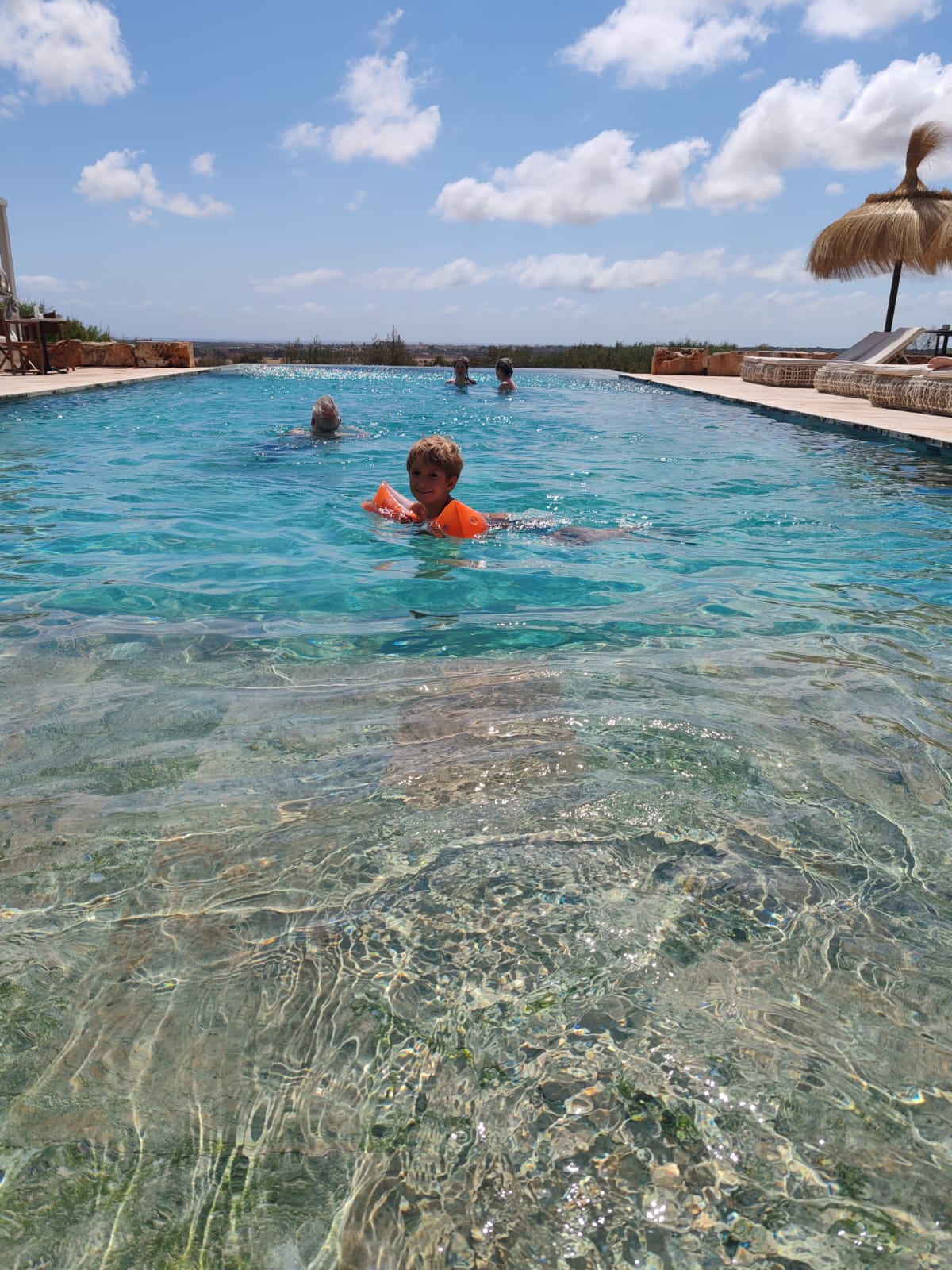
Ask specific questions before booking: Is there a suitable, safe sleeping arrangement? Can the room be kept at a comfortable temperature? Is there a refrigerator or food-preparation space if your family needs one? Are there stairs, balconies, pools, or other hazards that affect your baby? Never assume a cot or other baby equipment is available just because a listing describes itself as family-friendly; confirm details directly.
Expect sleep to change
A different room, time zone, or noise level can disrupt sleep. Bring a familiar bedtime cue if it is practical, but do not expect the routine to work exactly as it does at home. Check the sleeping space before arrival and follow current safe-sleep guidance wherever you stay. If you are unsure whether a provided cot or sleep product is appropriate, seek reliable professional guidance rather than improvising.
Keep the itinerary deliberately light
Choose one main outing, or none, on days with a long transfer. Build in time for feeds, changes, naps, and simply getting out of the door. A missed attraction is not a failed trip. If your baby is unsettled or the adults are exhausted, returning to the accommodation may be the most useful decision of the day.
A practical next step
Before booking, write down your baby’s three non-negotiable needs—such as a suitable sleep space, reliable access to feeds, and manageable transport. Use those requirements to assess the trip rather than trying to solve every possible issue after arrival.
Frequently asked questions
When is the best time to travel with a baby?
There is no single best age for every baby. Consider your child’s health, feeding and sleep needs, the journey, and advice from your healthcare professional where relevant.
What should I pack for a baby on a flight?
Pack the essentials you may need during delays: feeding supplies, nappies, wipes, spare clothing, comfort items, and any required medication. Check the airline and airport rules before travelling.
Should I book baby equipment at the destination?
If you need a cot, car seat, or other essential equipment, confirm its availability, suitability, and condition directly with the provider. Have a backup plan if the equipment is essential to safety.